

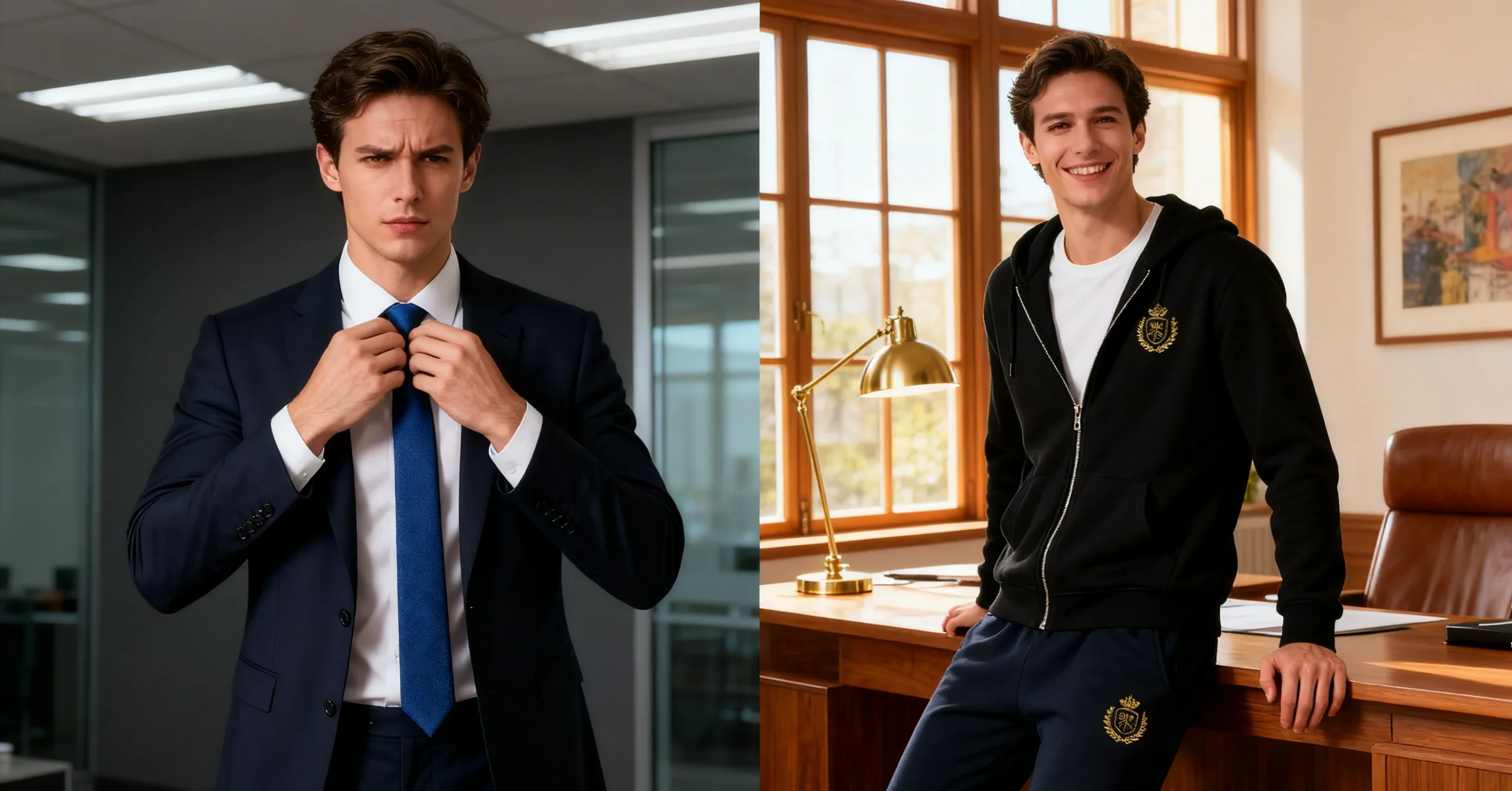
Remember that expensive blazer that looked perfect but left you constantly adjusting the shoulders? The designer jeans that required a belt and prayer to stay comfortable? The ‘luxury’ shoes that had you limping by lunch? For decades, we accepted discomfort as the price of looking good, convinced that true style required sacrifice.
That era is over. The global shift toward remote work, wellness consciousness, and authentic living has fundamentally changed what we value in clothing. Today’s luxury isn’t about showing off – it’s about feeling genuinely good in what you wear, every single day.
This transformation runs deeper than just fashion trends. We’ve collectively realized that life is too short to spend it in uncomfortable clothes. The modern professional who confidently wears premium joggers to a video call, the executive who chooses breathable fabrics over rigid suits, the fashion-conscious person who prioritizes how clothes feel over how they photograph – they’re not being lazy. They’re being smart.
Most people find that their expensive dress shirt feels great for the first two hours, then becomes increasingly uncomfortable as the day progresses. The collar tightens, the fabric starts feeling synthetic, and by evening, you’re desperate to change. This is the difference between looking premium and feeling premium.
The brands that understand this shift are thriving. The ones still selling status over comfort are being left behind.
The Comfort Revolution: Why Everything Changed
Several cultural forces converged to make comfort the ultimate luxury. The pandemic certainly accelerated this change, but the roots run much deeper.
The Remote Work Reality
When millions of people started working from home, something interesting happened. The arbitrary divide between “work clothes” and “comfortable clothes” began to dissolve. People discovered they could be productive, professional, and comfortable simultaneously. More importantly, they realized how much mental energy they’d been wasting on clothes that fought them all day.
This wasn’t about becoming slovenly or unprofessional. It was about recognizing that comfort actually enhances performance. When you’re not constantly adjusting tight waistbands, dealing with scratchy fabrics, or nursing sore feet, you have more mental bandwidth for what actually matters.
The Wellness Integration
Health and wellness shifted from niche interests to mainstream priorities. This change affected how people think about everything they put in and on their bodies. Just as we became more conscious about food ingredients, we started paying attention to how our clothes affected our physical and mental well-being.
Restrictive clothing that impedes circulation, synthetic fabrics that trap heat and moisture, and poorly fitting garments that create pressure points suddenly seemed as outdated as smoking indoors. The connection between what we wear and how we feel became impossible to ignore.
The Authenticity Movement
Social media initially pushed fashion toward performance and display. But as the medium matured, people began craving authenticity over perfection. The carefully curated, uncomfortable-but-beautiful aesthetic started feeling hollow compared to genuine comfort and confidence.
This shift shows up in how we talk about clothes. Instead of “Does this look good?” the question became “Does this feel good?” Instead of “What will people think?” it became “Does this serve my life?”
What Modern Luxury Actually Looks Like
Contemporary luxury in fashion isn’t about logos, price tags, or exclusivity. It’s about a different set of values entirely.
Effortless Sophistication
True luxury today means looking polished without effort. It’s the perfectly cut joggers that work for both lounging and casual meetings. The breathable button-down that transitions seamlessly from home office to dinner out. The shoes that look elegant but feel like slippers.
This requires superior design and materials. Cheap comfort usually looks cheap. Luxury comfort maintains visual appeal while delivering genuine physical ease.
All-Day Performance That Matters
Luxury clothing now needs to perform across diverse situations and extended wear. The modern wardrobe staple isn’t just comfortable when you put it on – it stays comfortable after hours of wear, movement, and various activities.
This performance standard has pushed brands toward better fabric technology, more thoughtful construction, and designs that accommodate real bodies in real situations. Brands like CozyVora have built entire philosophies around this principle, understanding that true comfort becomes the foundation of confidence.
Sensory Excellence
Premium comfort engages all the senses. It’s fabric that feels luxurious against skin, materials that regulate temperature naturally, and construction that moves silently with your body. It’s the absence of irritation, restriction, or distraction.
This sensory dimension separates true comfort from mere softness. A fabric can feel soft initially but become clingy or uncomfortable with wear. Genuine luxury comfort maintains its pleasant qualities throughout extended use.
The Hidden Science: Why Premium Comfort Costs More (And Why It’s Worth It)
Creating truly comfortable luxury requires understanding the intersection of materials, construction, and human physiology. This knowledge separates premium brands from those just adding “comfort” to their marketing.
Understanding Fabric Weight: The GSM Factor
True comfort luxury often comes down to fabric weight. While fast fashion uses 140-160 GSM cotton that feels flimsy, premium comfort brands work with 260-400 GSM materials that provide substance and drape. This weight difference creates the ‘substantial’ feeling that distinguishes luxury comfort from basic softness.
Here’s what most people don’t realize: lightweight fabrics may feel comfortable initially, but they lack the structure to maintain their shape throughout the day. Heavyweight fabrics actually get more comfortable as they warm to your body temperature and settle into natural draping patterns.
Advanced Fabric Technology
Modern comfort starts with enhanced materials that didn’t exist in previous generations. These aren’t synthetic substitutes for natural fibers – they’re elevated versions that maintain the best qualities while eliminating drawbacks.
Temperature Regulation: Premium fabrics now actively manage body temperature rather than just insulating or exposing. Natural fibers like merino wool and advanced cotton blends adjust to ambient conditions and activity levels.
Moisture Management: Luxury comfort fabrics handle perspiration intelligently, wicking it away from the skin while remaining breathable. This prevents the clammy, uncomfortable feeling that ruins even well-designed clothes.
Stretch and Recovery: Quality comfort fabrics provide appropriate stretch for movement while returning to their original shape. This prevents the bagging and distortion that makes clothes look sloppy over time.
Construction Innovation That You Can Feel
How clothes are assembled affects comfort as much as the materials themselves. Premium construction techniques prioritize how garments interact with the human body during actual use.
Seam Placement: Luxury comfort brands position seams to avoid pressure points and friction zones. This requires understanding human anatomy and movement patterns, not just following traditional pattern-making rules.
Edge Finishing: Every point where fabric meets skin becomes a potential comfort issue. Premium brands use techniques like flat-lock seaming, bound edges, and soft interfacing to eliminate irritation.
Fit Engineering: Comfortable luxury requires understanding the difference between size and fit. It’s designing for how bodies actually move, not just how they appear when standing still.
Finding Your Personal Comfort Sweet Spot
Not everyone’s comfort needs are identical. Climate, lifestyle, body type, and personal sensitivity all affect what feels luxurious. The key is developing awareness of your specific requirements.
Climate-Smart Comfort: Matching Fabrics to Your Environment
Your environment heavily influences what constitutes comfortable luxury. Hot, humid climates demand different fabric properties than cold, dry ones. Urban environments with temperature-controlled buildings require different adaptability than outdoor-focused lifestyles.
Hot Climate Luxury: Prioritize breathability, moisture-wicking, and loose construction that allows air circulation. Natural fibers often excel here, but advanced synthetics can provide superior performance.
Cold Climate Luxury: Focus on insulation that doesn’t create bulk, wind resistance, and layering compatibility. Wool blends often provide the best balance of warmth and comfort.
Variable Climate Luxury: Seek versatile pieces that adapt to changing conditions. Mid-weight fabrics with temperature-regulating properties often work best.
Lifestyle Integration That Actually Works
Your daily activities determine which comfort features matter most. Sedentary work has different requirements than active jobs. Travel-heavy lifestyles need different properties than home-based routines.
Professional Comfort: Prioritize pieces that maintain appearance under extended wear, resist wrinkling, and allow natural movement during long days.
Active Comfort: Focus on stretch, moisture management, and construction that won’t fail during physical activity while still looking appropriate for various settings.
Travel Comfort: Emphasize wrinkle resistance, easy care, versatility across occasions, and comfort during extended sitting or standing.
Understanding Your Body’s Comfort Language
Understanding your physical sensitivities helps identify which comfort features provide the most value. Some people are texture-sensitive, others temperature-sensitive, and some are primarily concerned with fit and movement.
Texture Sensitivity: Prioritize fabric hand-feel, seam construction, and edge finishing. Premium natural fibers often work best for sensitive skin.
Temperature Sensitivity: Focus on fabrics with excellent temperature regulation and construction that allows appropriate airflow or insulation.
Movement Requirements: Emphasize stretch, fit engineering, and construction that accommodates your range of motion without restriction.
The Smart Economics of Comfort Luxury
Investing in comfort luxury requires understanding its true economics. While initial costs may be higher, the value equation often favors quality over quantity.
The Productivity Premium You Can’t Ignore
Comfortable clothing can have measurable impacts on productivity and well-being. Studies suggest that uncomfortable clothing can reduce focus and increase stress levels throughout the day. When you’re not distracted by physical discomfort, you can focus more completely on tasks. When you feel good in your clothes, confidence increases and stress decreases.
These benefits are difficult to quantify precisely, but they represent real value that justifies premium pricing for truly comfortable pieces.
Wardrobe Efficiency That Simplifies Life
Comfortable luxury pieces tend to be more versatile and get worn more frequently. This reduces the total number of items needed and simplifies decision-making. A smaller wardrobe of highly comfortable, versatile pieces often provides more value than a larger collection of specialized, less comfortable items.
When every piece in your wardrobe actually serves your life, getting dressed becomes effortless rather than stressful.
Building a Comfort-First Wardrobe Strategically
Transitioning to comfort luxury requires strategy. Most people can’t replace entire wardrobes immediately, so prioritizing upgrades delivers maximum impact.
Foundation First: Start Where It Matters Most
Start with the pieces you wear most frequently and for the longest duration. These typically include:
Basic Tees and Tops: These touch your skin directly and are worn across many situations. Investing in premium comfort here provides daily benefits.
Daily Bottoms: Whether jeans, chinos, or other pants, comfortable fits and fabrics in your most-worn pieces dramatically improve daily experience.
Undergarments: Often overlooked, quality undergarments provide the foundation for everything else. Poor underwear or undershirts can ruin even the most comfortable outerwear.
Gradual Quality Escalation: Learn As You Go
Rather than replacing everything at once, gradually upgrade pieces as they wear out. This allows you to compare quality levels directly and understand which comfort features matter most to your lifestyle.
Each upgrade teaches you something about your preferences and helps inform future purchases. You’ll develop intuition about which brands and styles work best for your specific needs.
Seasonal Adaptation: Build Smart, Not Fast
Build comfort luxury gradually across seasons. Summer pieces require different comfort properties than winter ones. Understanding these differences prevents purchasing mistakes and ensures year-round comfort.
Spring and fall transition pieces often provide the best value since they’re useful across multiple seasons.
The Future of Comfort Luxury
The trend toward comfort as luxury shows no signs of reversing. If anything, it’s likely to accelerate as more people experience the benefits of clothing that truly serves their lives.
Technology will continue improving the comfort-luxury equation. New materials, construction techniques, and manufacturing processes will make high-performance comfort more accessible while maintaining the exclusivity that luxury consumers value.
The brands that thrive in this environment will be those that understand comfort as more than just marketing positioning. They’ll invest in the materials, construction, and design philosophy necessary to deliver genuine comfort luxury rather than just labeling existing products as “comfortable.”
Making the Comfort Choice: Your New Standard
The shift toward comfort as luxury isn’t about lowering standards or accepting mediocrity. It’s about raising standards to include how clothes actually perform in real life, not just how they appear in idealized conditions.
This evolution represents fashion maturing beyond pure aesthetics toward genuine functionality. The result is clothing that serves human needs more completely – looking good while feeling great, performing across situations while maintaining beauty, and supporting active lives while providing quiet confidence.
The next time you’re choosing between looking good and feeling good, remember that the question itself is obsolete. Modern luxury means never having to make that choice again. The best clothes do both, effortlessly.
Ready to Experience What Comfort-First Luxury Actually Feels Like?
CozyVora’s heavyweight cottons and engineered fits prove that premium comfort isn’t just possible – it’s the new standard. From their bio-washed, pre-shrunk construction to fabrics that range from breathable 160 GSM to substantial 400 GSM weights, every piece demonstrates that comfort and elegance aren’t opposites – they’re partners.
Leave a Reply