

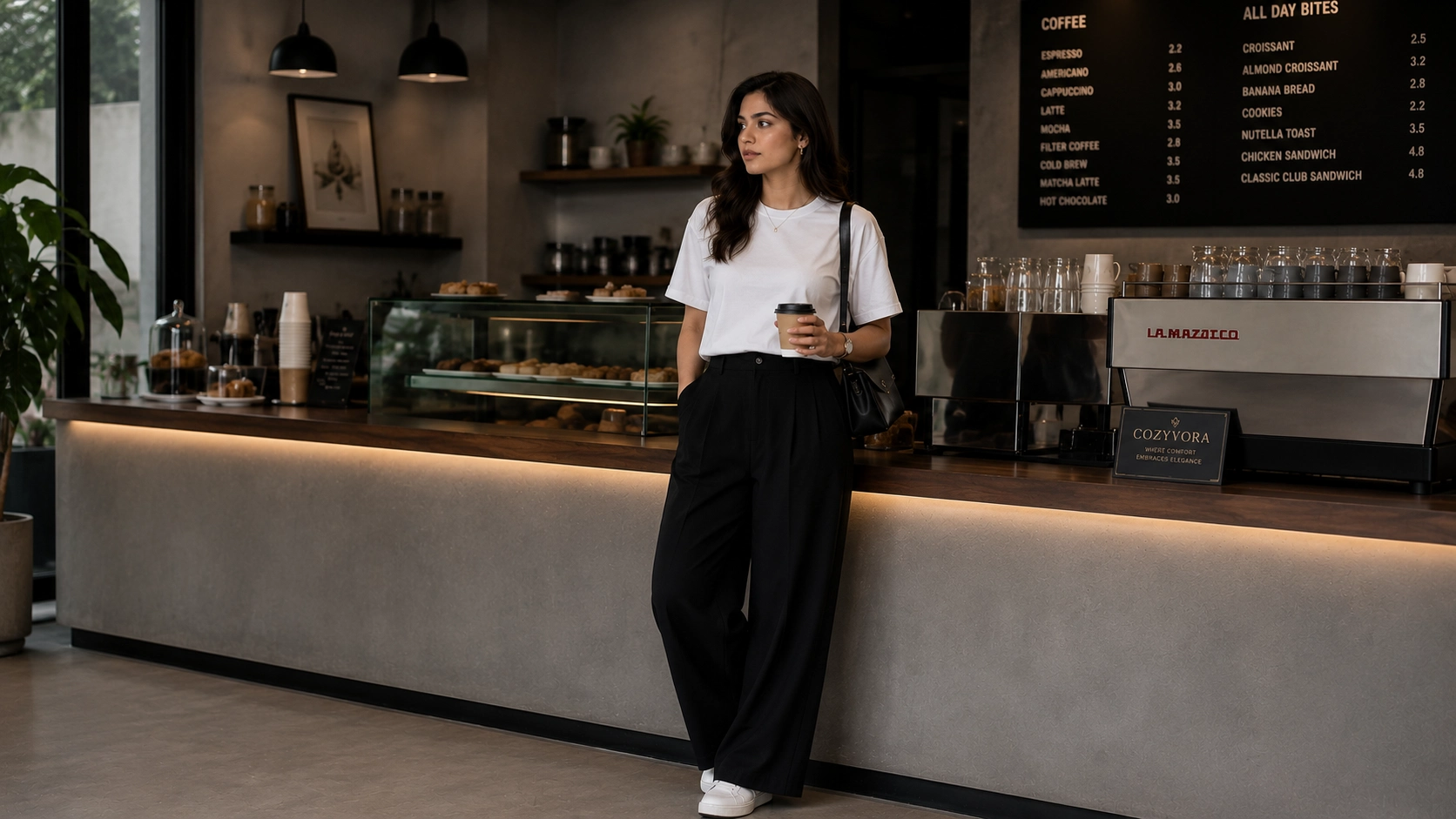
The answer isn’t what most people expect.
It isn’t money. It isn’t a brand, a capsule wardrobe formula, or some innate sense of aesthetic. The people who always seem to look effortlessly good — the ones you notice but can’t quite explain why — aren’t working harder at dressing. They’re not following a rule most people missed.
They’re comfortable. Genuinely, physically comfortable. And that changes everything about how they look.
Not as a metaphor. Literally. When you’re physically at ease in what you’re wearing, your body language changes. Your posture opens. You stop adjusting, tugging, crossing your arms. You inhabit the room rather than managing your discomfort inside it. That shift in presence is visible — and it reads, to everyone around you, as confidence.
That’s the real reason. Everything else — the rules, the formulas, the wardrobe principles — is how you apply it.
The Psychology of Comfort — Why It Physically Changes How You Look
This is the part most style guides skip entirely. It’s probably the most important thing to understand.
When you’re physically uncomfortable — wearing shoes that pinch, waistbands that dig in, fabrics that itch or restrict — your body responds. Your posture subtly shifts. You adjust, pull at your clothes, shift your weight, cross your arms without knowing why. None of this is conscious. All of it is visible.
Discomfort has a microexpression. And it layers itself on top of whatever outfit you’ve chosen.
Research on embodied cognition — how our physical state affects our behaviour and how others perceive us — consistently shows that physical ease correlates with confident, open body language. When you’re comfortable, you stop managing your clothing and start inhabiting it. You stand differently. You occupy space more naturally. You’re present in the conversation rather than monitoring your own discomfort.
That absence of self-consciousness reads, at a body language level, as ease, confidence, and authority.
This is the argument for comfort-first dressing that most style advice skips entirely. Not that it’s more practical, though it is. But that it makes you look better. Because looking put together is only partially about the clothes. A significant portion of it is about how you carry them.
The most quietly stylish people across every era share this trait: they look comfortable in whatever they’re wearing. That physical ease isn’t incidental to their style. It’s constitutive of it.
Why the Comfort vs. Style Debate Is Built on a Myth
Once you understand the psychology, the conventional wisdom starts to unravel.
Fashion has a way of presenting false binaries as self-evident truths. Comfort versus style is one of the most persistent — and most quietly costly.
The logic usually runs like this: structured and fitted looks polished; loose and soft looks relaxed; polished equals put together; relaxed equals sloppy. Therefore, the more comfortable you dress, the less intentional you look.
The problem isn’t that this logic is controversial. The problem is that it confuses formality with intention.
What the human eye actually registers as “put together” isn’t formality level. It’s coherence. The sense that someone made deliberate choices — that the outfit was assembled, not grabbed. You can achieve that with a tailored blazer. You can achieve it just as effectively with a perfectly fitted crew neck and well-cut trousers. What you cannot achieve it with is whatever was clean and closest to the door, regardless of how formal it is.
Style has always been about intention. Comfort, approached with the same deliberateness, produces exactly the same result — with the additional benefit that you can move, breathe, and remain in a decent mood throughout the day.
The brands and individuals who have figured this out don’t dress for formality. They dress for coherence. That single shift changes everything.
The Three Rules That Actually Determine Whether You Look Put Together
Once you release the idea that formality equals style, you need a new framework. Here are the three principles that consistently separate effortlessly polished from comfortably sloppy.
Rule 1 — Fit Is the Foundation, Always
Most style guides state this without explaining the mechanism, so here it is.
Well-fitted clothing creates a clear silhouette — a legible relationship between the garment and the body underneath it. That legibility signals intention. It communicates that you chose clothes that belong to your body, not clothes that happened to be available in your approximate size.
Comfort doesn’t require poor fit. This conflation is what undermines most attempts at comfortable style. Somewhere along the way, “comfortable” became synonymous with “several sizes too large,” and the result is an outfit that reads as accidental rather than chosen.
The practical principle: one deliberately relaxed fit per outfit. If your trousers are wide-leg, your top should have some presence — not tight, but defined. If your top is intentionally oversized, your bottom should carry more structure. The interplay of relaxed and defined creates the visual tension that registers as styled. Two shapeless pieces together simply registers as shapeless.
This doesn’t mean discomfort. A well-fitted piece should feel good to wear. Finding clothing that fits beautifully and feels comfortable is the core task — and when you find it, you protect it. You buy it in multiple colours. You care for it properly. That combination is rarer and more valuable than most people account for.
Rule 2 — Fabric Communicates Before You Enter the Room
There’s a hierarchy in clothing materials that operates largely below conscious awareness. When you encounter someone in fabric that holds its shape, drapes with intention, and looks like it has survived repeated use with its integrity intact — you register quality. You register care.
When you encounter someone in fabric that pills, sags, or loses its colour after a few washes — you register the opposite.
This is precisely why cheap comfortable clothes read as sloppy while high-quality comfortable clothes read as intentional. The comfort level might be identical. The visual signal is completely different. The fabric is doing the signalling before the silhouette, the colour, or the styling has a chance to speak.
The fabrics worth building a comfort-first wardrobe around are the ones that maintain their appearance over time. Super Combed Cotton — the kind that stays smooth, retains its colour depth, and holds its shape wash after wash — does something that lower-grade cotton simply cannot: it looks the same on day ninety as it did on day one. High-density fleece that maintains its structure and surface rather than pilling into a visual record of every wear. Natural blends that drape rather than sag.
This is the design principle CozyVora is built on — both Super Combed Cotton and High-Density Fleece are specified not as marketing language but as functional requirements for clothing that will maintain its visual quality through real, repeated use. Fabric quality isn’t a luxury feature. In comfort-first dressing, it’s the non-negotiable.
Rule 3 — One Intentional Element Per Outfit
You don’t need to be interesting from head to toe. You need to be interesting somewhere.
The “one deliberate element” principle is what separates an assembled outfit from a random collection of comfortable things. It doesn’t need to be dramatic or expensive. It could be:
- A colour choice that’s specific and considered — deep burgundy instead of generic navy, warm ecru instead of default white
- A texture contrast that reads as conscious — smooth cotton paired with brushed fleece in the same tonal family
- A single accessory that communicates a decision: a clean watch, a leather bag, one piece of jewellery placed with intention
- Footwear that elevates everything above it — clean leather shoes or fresh white trainers when the rest of the outfit is casual
- One particularly well-fitted piece among more relaxed ones, creating a point of definition The deliberate element sends a signal: this outfit was thought about. Even if you spent four minutes getting dressed. Even if you wear this combination twice a week. One conscious choice reframes everything around it as intentional rather than accidental.
The Context Framework — What “Put Together” Really Means Today
The hybrid era changed the target. A dress code that once applied uniformly Monday through Friday now applies Tuesday and Thursday for many people, with everything else existing somewhere between home desk, local café, casual meetings, and errands — often within the same day.
“Put together” is no longer a fixed standard. It scales with context. Here’s how to calibrate.
Working From Home (Video Visible) You need to read as intentional from the shoulders up. That’s the entire visible frame. A quality top in a clean colour, fabric that looks deliberate, fits well at the shoulder — this is the full brief. What you’re wearing below the frame is genuinely irrelevant. A perfectly chosen crew neck or structured sweater does more on a call than any blazer worn over something you resent.
The Café or Co-Working Space You’ll be fully visible. The relaxed-and-intentional balance matters most here. Focus: two comfortable pieces with a shared colour story, plus one element that wasn’t random. A good coat, a deliberately chosen colour, clean footwear. The most effective café outfit is usually the simplest one — two pieces that belong together, finished with one thing that looks chosen.
Casual Meetings and Errands Errands have a way of becoming spontaneous social situations. The outfit that serves both — the pharmacy run and the unexpected coffee — is one that has coherence, not formality. A well-fitted sweatshirt in a considered colour with straight-cut dark trousers reads better in more contexts than a stiff blazer worn with something you’ve been pulling at all day.
Travel Travel has historically been where comfort-first dressing fails because people assume that comfortable travel clothes can’t be elegant. The counter-truth: an all-neutral, well-textured travel outfit in premium fabrics photographs well, sits without wrinkling noticeably, and takes you from airport to destination without requiring a change. Monochrome works especially powerfully here. One palette, excellent fabric, near-zero effort.
Five Outfit Formulas That Work Every Time
These aren’t trends. They’re structural combinations — approaches that consistently produce a put-together result with comfort at the centre. Plug in your own pieces, your own palette, your own proportions.
Formula 1 — The Elevated Monochrome
The structure: Same colour family, head to toe. Slight tonal variation within that family is not just acceptable — it adds depth.
Why it works: Monochrome always reads as intentional. Nobody accidentally wears the same colour from head to toe. The choice itself communicates deliberateness, and the unified palette creates a long, clean visual line that’s inherently flattering regardless of body type.
Comfort application: Your most comfortable pieces, in a rich neutral — camel, ecru, stone, deep navy, charcoal — read immediately as styled when worn as a tonal unit. The distinguishing factor is fabric quality. A pilling, worn-out set reads as old. A well-maintained, clean-textured set in a cohesive colour reads as a considered choice.
The detail that elevates it: One grounding accessory or footwear choice in a complementary neutral. Without it, monochrome risks reading as loungewear that hasn’t been changed. With it, it reads as the most effortless version of dressed.
Formula 2 — The Texture Contrast
The structure: Two neutral pieces in different textures, within the same tonal family.
Why it works: Texture contrast creates visual interest without colour conflict. It looks styled because the combination feels considered — smooth paired with brushed, matte paired with something with slight sheen, structured fabric paired with fluid. The eye reads intentionality into the contrast even when none was laboured over.
Example: A smooth-cotton crew neck in white paired with softly brushed trousers in off-white or light grey. Or a brushed fleece sweatshirt in charcoal with a smoother wide-leg trouser in a similar dark tone.
Comfort application: Both pieces can be genuinely, completely comfortable. The formula does all the style work through the textural relationship. No structure required from either garment.
Formula 3 — The Deliberate Third Piece
The structure: Two comfortable base pieces plus one elevated third element that does the style work.
Why it works: The third piece signals that an outfit was built rather than defaulted into. It’s the piece that separates “I got dressed” from “I dressed.”
What the third piece can be: A well-maintained coat in an interesting cut or fabric. A pair of simple, clean leather shoes. A scarf placed deliberately rather than thrown on. A bag that has visual presence. One piece of jewellery that reads as chosen rather than worn out of habit.
Example: Quality jogger in deep navy + soft, well-fitted sweatshirt in off-white + long camel overcoat. The coat is doing the entire style job. The base is completely, uncompromisingly comfortable.
Formula 4 — The Fitted/Relaxed Balance
The structure: One fitted (or more structured) piece paired with one relaxed piece. Never both relaxed simultaneously.
Why it works: The tension between fitted and relaxed creates visual interest and communicates intentionality. It’s the same underlying principle as a blazer over a t-shirt — except the fitted element doesn’t have to be tailored, structured, or formal. It just needs to provide definition.
Example: Well-cut straight trousers with a clean silhouette (comfortable but structured) paired with a genuinely oversized, high-quality sweater. Or a fluid, wide-leg soft pant with a fitted, slightly tucked crew neck.
The rule to internalise: Relaxed top = more structure below. Relaxed bottom = more definition above. The balance between the two is what registers as deliberate.
Formula 5 — The Rich Neutral Foundation
The structure: One premium-looking neutral as the anchor. Everything else calibrates to it.
Why it works: Rich neutrals — camel, chocolate brown, deep charcoal, warm ivory, cognac, slate blue, forest green — communicate quality independently. They’re the shades that don’t compete for attention, don’t date, and consistently register as considered.
Application: When inspiration is low, build around one rich neutral piece that looks expensive in isolation. Let the rest of the outfit follow its lead. This formula is especially effective when the foundational piece is in a high-quality, well-maintained fabric — because the colour richness and the fabric quality together do the full visual job.
What to Look for When Building a Comfort-First Wardrobe
The following criteria separate a comfort-first wardrobe that looks intentional from one that looks like a collection of things that were fine at the time.
Fabric First — Every Time
The single most impactful decision in comfort-first dressing is material quality. Premium fabrics — Super Combed Cotton, high-density fleece blends, natural fibre knits — do several things that lower-quality alternatives don’t:
- They hold their shape after repeated washing, rather than stretching or shrinking into something unrecognisable
- They drape in ways that suggest quality rather than hanging limply or bunching awkwardly
- They don’t pill, sag, or develop visual wear patterns within months
- They retain their colour depth, so the rich navy you bought stays rich navy rather than fading to a dull, washed-out version A wardrobe built on genuinely good fabrics will look more put-together two years from now than a wardrobe of cheap alternatives looked on day one. This is the compounding logic of quality investment in clothing: it pays forward, not just immediately.
Silhouette — Intentional, Not Incidental
Look for pieces with a deliberate silhouette. Not necessarily close-fitted, but purposeful. Wide-leg trousers that hold their shape through the leg. Crew necks that sit correctly at the shoulder rather than sliding off it. Oversized pieces that feel intentionally generous rather than accidentally large.
The silhouette question to ask before buying any comfortable piece: does this look the way it’s designed to look? Or does it just happen to fit in my size?
Versatility as the Point
The most valuable pieces in a comfort-first wardrobe are the ones that move between contexts without changing. A crew neck that works at home, in a café, and on a travel day is worth more than three single-context pieces. Well-cut straight trousers that read as smart-casual in a meeting and relaxed at brunch are the definition of wardrobe efficiency.
In comfort-first dressing, versatility isn’t a compromise. It’s the design brief. The fewer unnecessary decisions you have to make, the more deliberate each decision can be.
Colour Discipline
Buy into a palette rather than individual colours. A wardrobe that shares a colour language — broadly the same family of neutrals, or the same tonal temperature — allows any two pieces to work together. This is the practical root of the “effortless” look: it isn’t that those people don’t think about clothes. It’s that their wardrobe is built so that any combination works without thinking.
Rich, deep, complex neutrals are the most reliable foundation: warm ivories, earthy camel, deep navy, charcoal, stone. These colours work with each other by default. They also photograph well, age gracefully, and communicate quality rather than trend.
The Mistakes That Make Comfortable Clothes Look Sloppy
Even genuinely good comfortable pieces can underperform when these patterns show up.
Wearing too many relaxed proportions simultaneously. An oversized top over wide-leg trousers creates a shapeless column. Comfortable, yes. Readable as a deliberate choice, no. Apply the fitted/relaxed balance — always one anchor of definition in any outfit.
Letting fabric age past its useful life. Pilling, fading, stretched-out necklines, and pulled threads communicate the same thing: this piece has given what it had to give. Comfort isn’t a justification for wearing clothing that has visibly given up. One quality piece cared for properly is worth four cheap pieces replaced every season.
Treating footwear as an afterthought. In a casual outfit, shoes carry disproportionate visual weight. Clean, simple, considered footwear — white trainers in genuinely good condition, simple leather shoes, clean sandals — elevates everything above them. Worn, lazy, or disconnected footwear undoes even carefully chosen pieces above it.
No colour intention. An outfit assembled from whichever clean items were closest reads exactly like that. Two minutes of tonal consideration — making sure the pieces share a colour family, or that any contrast is deliberate — produces a visually coherent result that reads as chosen rather than grabbed.
Treating accessories as optional indefinitely. You don’t need many. You need one, consistently. A single considered piece — a clean watch, a simple bracelet, a chain that’s become part of your personal signature — marks the difference between assembled and finished. It’s the detail that tells the eye: someone thought about this.
Key Takeaways
- Comfort and style are not in opposition. Comfort is the condition under which genuine style becomes visible. Discomfort shows — physically — and undermines whatever outfit you’ve assembled.
- What registers as “put together” is coherence, not formality. The eye looks for evidence of intention. Deliberate fit, deliberate colour, one deliberate detail.
- The three governing rules: Fit is the foundation (one relaxed element, not two simultaneously). Fabric communicates quality before anything else. One intentional element per outfit reframes everything around it.
- Outfit formulas work because they’re structural, not trend-dependent. Monochrome, texture contrast, the deliberate third piece, the fitted/relaxed balance, the rich neutral foundation — these produce results across seasons, contexts, and personal styles.
- Fabric quality is the highest-leverage investment in comfort-first dressing. Premium fabrics maintain their appearance over time and signal care without any additional visible effort.
- In casual outfits, footwear and accessories carry more weight, not less. Fewer structured elements mean each element’s visual contribution is amplified. The shoe matters more in a casual outfit than it does in a formal one.
Summary
The most durable style formula available is also the simplest: wear things that fit you well, in fabrics that hold their quality, in colour combinations that feel coherent, and let one deliberate detail make the whole thing look chosen.
Comfort doesn’t limit this equation. It enhances it — because clothes you’re genuinely comfortable in are clothes you actually wear well. The physical ease comes through in how you stand, how you move, how you occupy the room.
Style, at its core, has always been the relationship between a person and their clothes. The best relationships are the ones where both parties have what they need.
CTA
CozyVora is built on one premise: that comfort is not what you settle for when you’re not trying hard enough. It’s what you start with when you know what you’re doing.
Every piece is designed around Super Combed Cotton and High-Density Fleece — fabrics chosen not for their marketing value but for what they do: look right, feel right, and hold both qualities over time.
- Read Next: Clothing as Emotional Armor
- Read Next: Why Feeling Comfortable Makes You Look More Confident


Leave a Reply